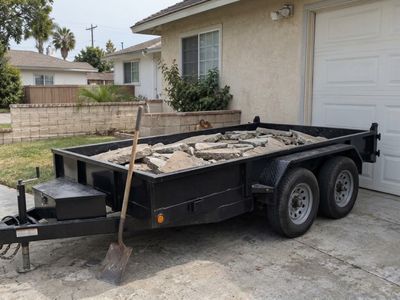
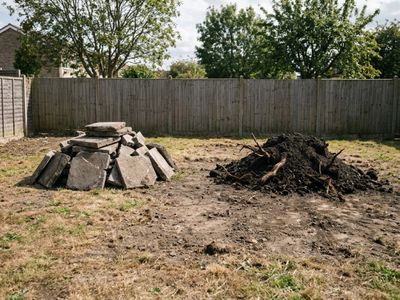
Broken concrete, dirt, sod, rock and brick shovelled up, loaded by hand and hauled off in our dump trailer. We break up smaller slabs depending on size and thickness. On a whole driveway or walkway we haul the pieces once the concrete is already broken. Clean concrete stays separate from the dirt and the trash. Two Downey jobs from August, a backyard patio and a driveway, are on this page. Serving Downey, Whittier, Long Beach, Pico Rivera and nearby cities. Call or text and tell us what's on the ground.
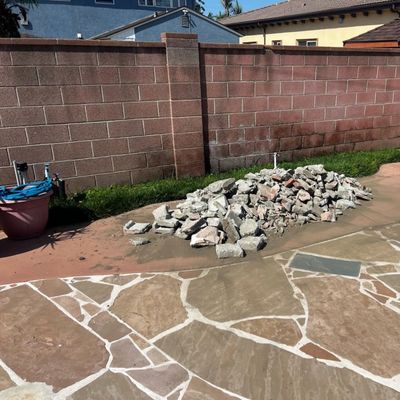
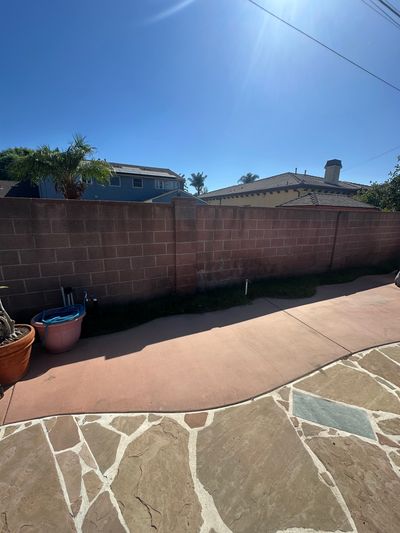
Broken concrete on a backyard patio · Downey · August 2026
Before
After
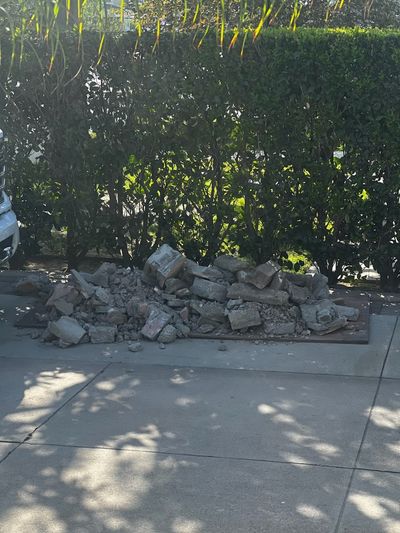
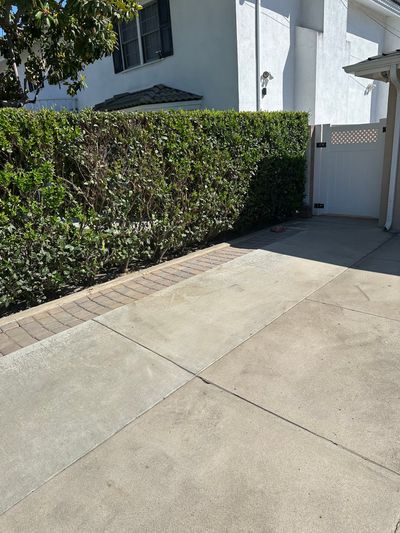
Broken concrete on a driveway · Downey · August 2026
Before
After
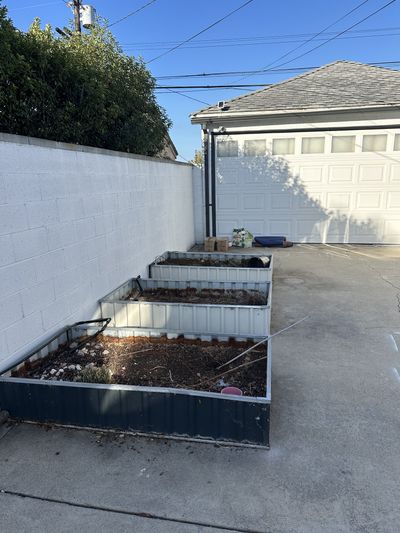
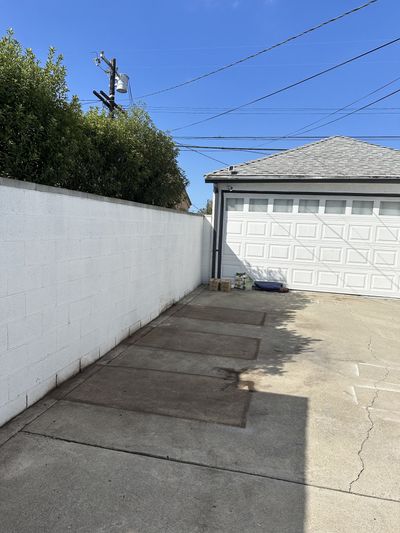
Three beds of dirt in Westchester
The soil from three raised beds looks like nothing on the lawn and weighs a lot in the trailer. Loaded by shovel, a small load by volume and a heavy one by weight.
Westchester, Los Angeles · September 2026
Before
After
Broken concrete on a backyard patio · Downey · August 2026
Before
After
Broken concrete on a driveway · Downey · August 2026
Before
After
Three beds of dirt in Westchester
The soil from three raised beds looks like nothing on the lawn and weighs a lot in the trailer. Loaded by shovel, a small load by volume and a heavy one by weight.
Westchester, Los Angeles · September 2026
The only job where weight runs out before space does
Every other load we take fills the trailer up. This one fills it down. A trailer piled with furniture is full when you can't stack any higher. A trailer with broken concrete in it is full when it's barely covering the floor.
That changes how we plan the day. Most of what we haul is measured in how much room it takes. Concrete, dirt, sod and brick get measured in weight, and the trailer reaches its limit long before it looks anywhere near loaded.
It also means we're honest about trips. A big patio tear-out is more than one run, and we'd rather say that at the start than discover it with the trailer sitting low on its springs.
What we haul
✓ Broken concrete from patios, driveways and walkways
✓ Dirt, soil and spoil from digging
✓ Sod and turf that's been lifted
✓ Rock, gravel, brick and block
✓ Old pavers and stepping stones
✓ Raised garden beds and the dirt inside them
✓ Tile and masonry rubble
How the load gets built
Tell us what it is, roughly how much, and whether it's already broken.
We back the trailer as close to the pile as the ground allows.
It gets loaded by hand, piece by piece and shovel by shovel.
Clean concrete is kept apart from the dirt and the trash as we load.
We sweep the area down before we pull out.
Before the day
✓ Tell us whether the concrete is already broken. It changes the whole job.
✓ Clear vehicles off the driveway so the trailer can get close.
✓ Keep the clean concrete apart from the dirt and the rubbish if it's easy. It loads faster that way.
What's on the ground
✓Already broken. A pile of slab pieces from a job someone else did. The simplest version. We load and go.
✓A small slab still whole. We break up smaller slabs ourselves, depending on the size and how thick it is.
✓A whole driveway or walkway. We don't break these up. Once the concrete has been broken, we haul the pieces.
✓Dirt and spoil. From a trench, a levelling job or beds being pulled out. Heavier than concrete for the same volume once it's wet.
✓Sod and turf. Lifted grass with soil still attached. Bulky, wet and much heavier than it looks on the lawn.
Why it takes more than one trip
Ten thousand pounds, and it fills faster than that
The trailer is 8 by 12 feet with 4-foot sides and a gross rating of 10,000 pounds. For heavy material we work to about three tons of load, and that is reached long before the trailer looks full.
A yard of broken concrete or wet soil weighs enough that a load can be knee deep in the bed and already done. Anyone who tells you a whole patio goes in one trip either hasn't weighed it or isn't planning to come back.
So we plan in trips and tell you up front. Access matters more here than on any other job too, because everything is carried or barrowed by hand from the pile to the trailer, and every extra ten feet shows up in the day.
Keeping it separate
Clean concrete has somewhere to go, mixed rubble doesn't
Concrete, brick and rock are inert material. Kept clean, a load of them is a single material with an obvious destination, and a clean load of reusable or recyclable material stays out of the landfill where it can.
Mix in soil, roots, timber offcuts and a couple of bags of rubbish and it stops being that. It becomes a mixed load and gets handled as one. This is the one page on the site where what you do before we arrive changes the outcome.
That's why we keep them separate on the trailer as we load, and why we'll ask you to keep the piles apart if it isn't extra work for you.
Who shows up
Crew and equipment
Every job runs out of an 8 × 12 ft dump trailer with 4 ft sides, about 14 cubic yards of space. Most jobs get a two-person crew, and we do all the lifting, loading and sweeping up.
Other ways to move heavy material
✓A dumpster. Heavy debris usually needs a dedicated smaller container rather than a general one, and many rental agreements limit what weight you can put in. Check before you fill it, because a container that's too heavy to lift doesn't get collected.
✓City bulky pickup. Doesn't take construction or demolition material. Los Angeles excludes it outright and the other cities out here are the same. This is not what those programs are for.
✓A pickup truck and a few runs. Half a ton is about where a half-ton pickup is already at its limit, which is a lot less concrete than it sounds. People find this out on the freeway.
✓Listing it as free fill. Works for clean soil and broken concrete. Somebody levelling a yard may take it away. Needs time and the material to be clean.
✓Burying it in the yard. Common and rarely a good idea. It resurfaces the next time anybody digs, and it's the next owner's problem.
We break up smaller slabs depending on the size and thickness. A whole driveway or walkway we don't break up. Once it's been broken, we haul the pieces.
How much can you take in one trip?
The trailer is rated to 10,000 pounds gross and we work to around three tons of heavy material. That's less volume than people expect, so a big job is usually more than one trip and we'll tell you that at the start.
Do you take dirt as well as concrete?
Yes. Soil, spoil, sod, rock and brick all go. Wet soil is heavier for its size than concrete, which surprises most people.
Does it matter if the concrete has dirt mixed in?
It does. Clean concrete on its own is a single material with a clear destination. Mixed with soil and rubbish it becomes a mixed load. Keeping the piles apart helps if it's no extra trouble.
Can you get to the backyard?
It depends on the gate and the ground. Everything is carried or barrowed by hand from the pile to the trailer, so the distance is the main thing that sets how long it takes.
Do you take the raised beds too?
Yes, the beds and the soil in them. We cleared three metal beds and their dirt on a job in Westchester.