
Shed Removal
Wood, metal and plastic backyard sheds taken apart and hauled away, along with everything stored inside. We empty it first, then unscrew and unbolt what we can and cut down what we can't, one panel at a time. A small concrete pad underneath can go too. Serving Downey, Whittier, Norwalk, Bellflower and nearby cities, 7 days a week. Call or text and we'll come take a look.
It looked like a bigger job than it is
A shed rarely gets removed because someone woke up and decided to. It gets removed because a rainy season finally got to the roof, a remodel needs the footprint, or a new shed is already sitting in the driveway waiting for the old one's spot.
Most people put it off for a while first. Taking down a small building sounds like it needs a construction crew, so the shed sits there another season, then another, getting worse.
It's smaller than that. A backyard shed comes apart panel by panel, the same way most of them went up.
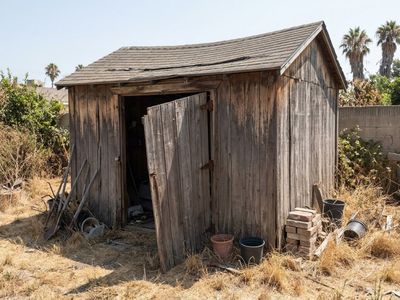
What comes out with the shed
- Wood, metal and plastic sheds
- Shelving, workbenches and pegboard inside
- Everything stored in it, cleared first
- A small concrete pad underneath
- Hardware, hinges and the door
- Sweep-up of the spot where it stood
How it comes down
- Walk us through what's inside and how the shed sits: on skids, staked into the ground, or bolted to a slab.
- Everything stored inside comes out first.
- Screwed or bolted panels come apart that way, wrench and screwdriver work.
- Wherever it's nailed, warped or rusted together, we cut it down with saws instead.
- Every piece gets loaded and we sweep the footprint clean.
Before we get there
- Pull out anything you're keeping.
- Have any power run to the shed disconnected.
- Tell us roughly how big and thick the pad is, if there's concrete underneath.
How the shed is attached to the ground
- Skids. Runners resting on the dirt or a gravel pad, not fastened to anything permanent. Usually the fastest of the three to clear.
- Ground anchors. Corkscrew-style stakes cabled to the frame, common on smaller portable buildings. The anchors get cut or unscrewed free before the shed moves.
- Bolted to a concrete slab. Brackets or anchor screws through the base frame into cured concrete. The most permanent of the three, and the reason a slab underneath is its own scope question rather than an assumption.
Why it's removal, not demolition
Unscrew first, cut only where it won't come apart
A shed assembled with screws or bolts at its panel joints comes apart the same way, wrench and screwdriver, not far off from taking apart furniture at a bigger scale. It's carpentry in reverse, not demolition.
Where it isn't screwed together, nailed framing, swollen wood, metal panels rusted into each other, we cut it down with saws and hammers instead. Either way, every piece ends up small enough to carry to the trailer by hand.
That's why a two-person crew can clear a small backyard shed in a single visit with hand tools. It's removal, panel by panel, not tearing down a building.
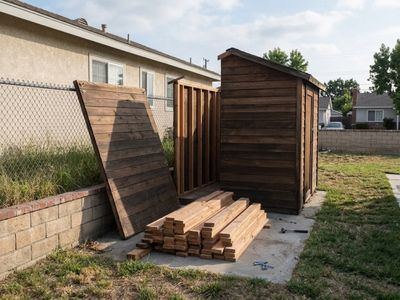
What's left when it's gone
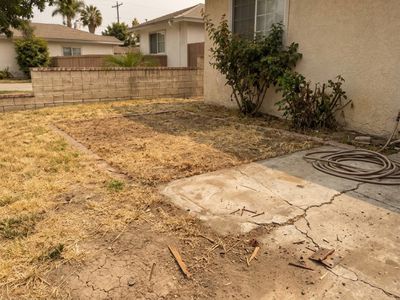
A bare footprint, not a hole
Once the shed and its contents are cleared, what's left is whatever was underneath it: dirt, dead grass, or a concrete pad. We don't resurface or reseed the spot, so it's worth knowing that before the day, not after.
A small pad can go with the shed. Size, thickness and weight all matter, the same way they do on any concrete job, so a bigger slab is worth mentioning when you book rather than assuming it's automatically included.
Wood and metal from the shed itself are the kind of clean, single-material load that stays out of the landfill when they can be recycled or reused. What was stored inside is a mixed bag and gets sorted the way any garage cleanout would.
Who shows up
Crew and equipment
Every job runs out of an 8 × 12 ft dump trailer with 4 ft sides, about 14 cubic yards of space. Most jobs get a two-person crew, and we do all the lifting, loading and sweeping up.
The other ways people consider
What each one involves before you pick one.
- City bulky pickup. Built for a handful of items at the curb, not a structure. A disassembled shed reads closer to construction debris than a normal bulky item, and the program excludes that outright.
- A demolition contractor. The right call for something large, permitted or complicated. Overkill for a small backyard shed that comes apart with hand tools in one visit.
- Doing the teardown yourself. Workable for a shed on skids with basic tools. A concrete-anchored slab or a rotted, unpredictable structure is usually where people stop and call someone.
- Selling or giving it away whole. Only works if the shed is sound and someone has a way to physically move a whole building, which is rarer than the listings make it look.
Wondering about the concrete pad?
Shed Removal questions
Can a junk removal crew really take down a shed, or do I need a demolition company?
For a small backyard shed, this is what we do. We take it apart panel by panel with hand tools, unscrewing or unbolting where we can and cutting where we can't.
Do I have to empty the shed first?
No. We clear out what's stored inside before the structure comes down, and it all goes on the same trip.
What happens to the concrete pad underneath?
A small pad can go with the shed. Tell us roughly how big and thick it is when you book.
Will it leave a hole in my yard?
No. Posts and anchors get cut or unscrewed at ground level, so what's left is a flat, bare spot, not a hole.
Can you take down a shed that's rotted or falling apart?
Yes. A structurally failing shed is one of the more common reasons people call, and it doesn't change how we take it apart.
Do you take metal and plastic sheds too, or just wood?
All three. Metal panels usually bolt apart cleanly, plastic sheds are lighter but can crack rather than unbolt, and wood comes apart or gets cut depending on its condition.
Locations served
Find us in your community
- Downey
- Whittier
- Paramount
- Long Beach
- Norwalk
- Bellflower
- Santa Fe Springs
- Anaheim
- Compton
- Lynwood
- Glendale
- Lakewood
- Pasadena
- Torrance
- Fullerton
- Los Angeles
- Pico Rivera
- Garden Grove
- South Gate
- Bell Gardens